Professional emergency furnace repair for Leesburg and Loudoun County homes.
When your furnace quits on a cold Loudoun County night, call (571) 561-3454 any time. A technician diagnoses the no-heat cause on arrival, explains the fix in plain language, and most emergency repairs are completed in a single visit. We cover Leesburg and all surrounding areas around the clock.
A furnace rarely fails on a mild afternoon. It fails on the coldest night of January, or the morning guests arrive, or the weekend the temperature drops twenty degrees. That is exactly when Loudoun Furnace Pros answers. Our emergency line runs around the clock, and the technician who arrives carries the diagnostic tools and common parts to resolve most no-heat calls on the spot.
The first thing we do is find out why the heat stopped. It might be a failed igniter, a tripped safety switch, a dead thermostat, or a cracked heat exchanger shutting the system down to protect you. Each cause gets a different fix, and guessing wastes the one thing you do not have: time.
Not every furnace problem needs a midnight visit, but some do. Call right away if you smell gas or rotten eggs near the furnace, if the carbon monoxide detector is sounding, if the furnace is making loud banging or screeching and then shutting off, or if the house is dropping temperature fast with vulnerable people inside.
For less urgent symptoms, like uneven heating, a new rattle, or a furnace that runs longer than usual, a next-day visit is usually fine. When you call, describe what you hear, smell, and see. We will tell you honestly whether it can wait until morning.
It starts with your call and a few quick questions: what is the furnace doing, is there any smell, when did the heat stop. That tells the technician what to load and how to prioritize your call against others on the route.
On arrival, the technician runs the full heating sequence test: thermostat call, inducer, ignition, flame, blower. The failed step points to the failed part. You get the findings in plain language and a written plan before any repair begins. Then the fix, a full test cycle, and heat back in the vents.
A furnace that starts and then shuts itself off is usually a safety device doing its job. The most common trigger is the limit switch tripping because the heat exchanger is overheating, often from a clogged air filter choking airflow. Another frequent cause is the flame sensor losing its flame signal, which tells the gas valve to close rather than risk unburned gas.
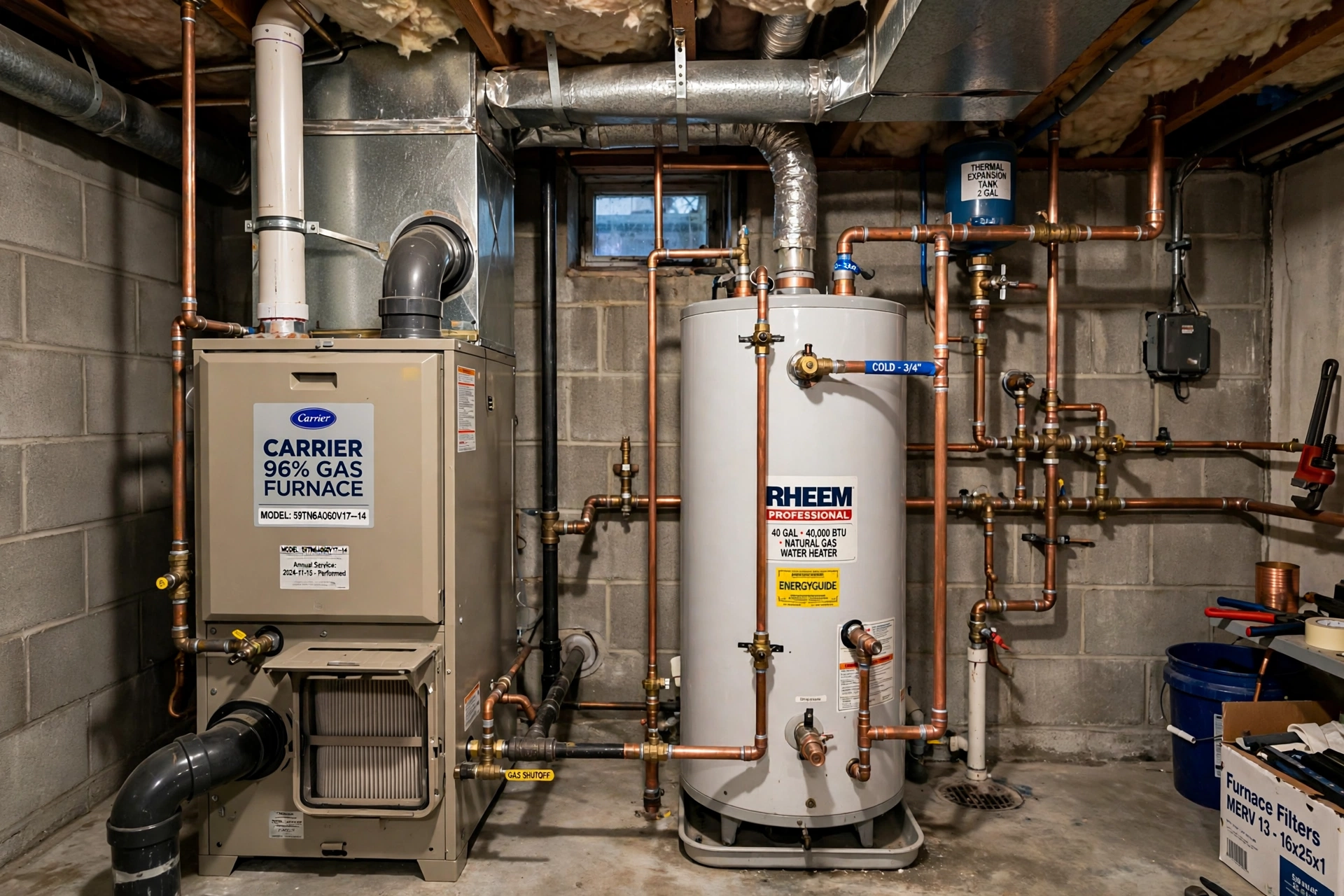
During an emergency visit, the technician traces where the heating sequence stops: the thermostat call, the inducer motor, the igniter, the gas valve opening, the flame sensor proving fire, then the blower motor moving air. The step where it stalls points straight at the failed part, whether that is a weak igniter, a coated flame sensor, a tripped limit, or a control board misreading signals.
When you call (571) 561-3454, note how long the furnace runs before shutting off and whether you see any flashing error code through the sight glass. That pattern often lets the technician load the right part before leaving the shop, which can turn a two-trip repair into one.
Short cycling also accelerates wear on every part involved in the start sequence. The igniter endures extra heating cycles, the inducer motor starts and stops repeatedly, and the gas valve opens and closes far more than it was designed to. Catching the cause early protects those components along with the heat exchanger, which is another reason a furnace that will not stay running deserves a prompt visit rather than a wait-and-see approach.
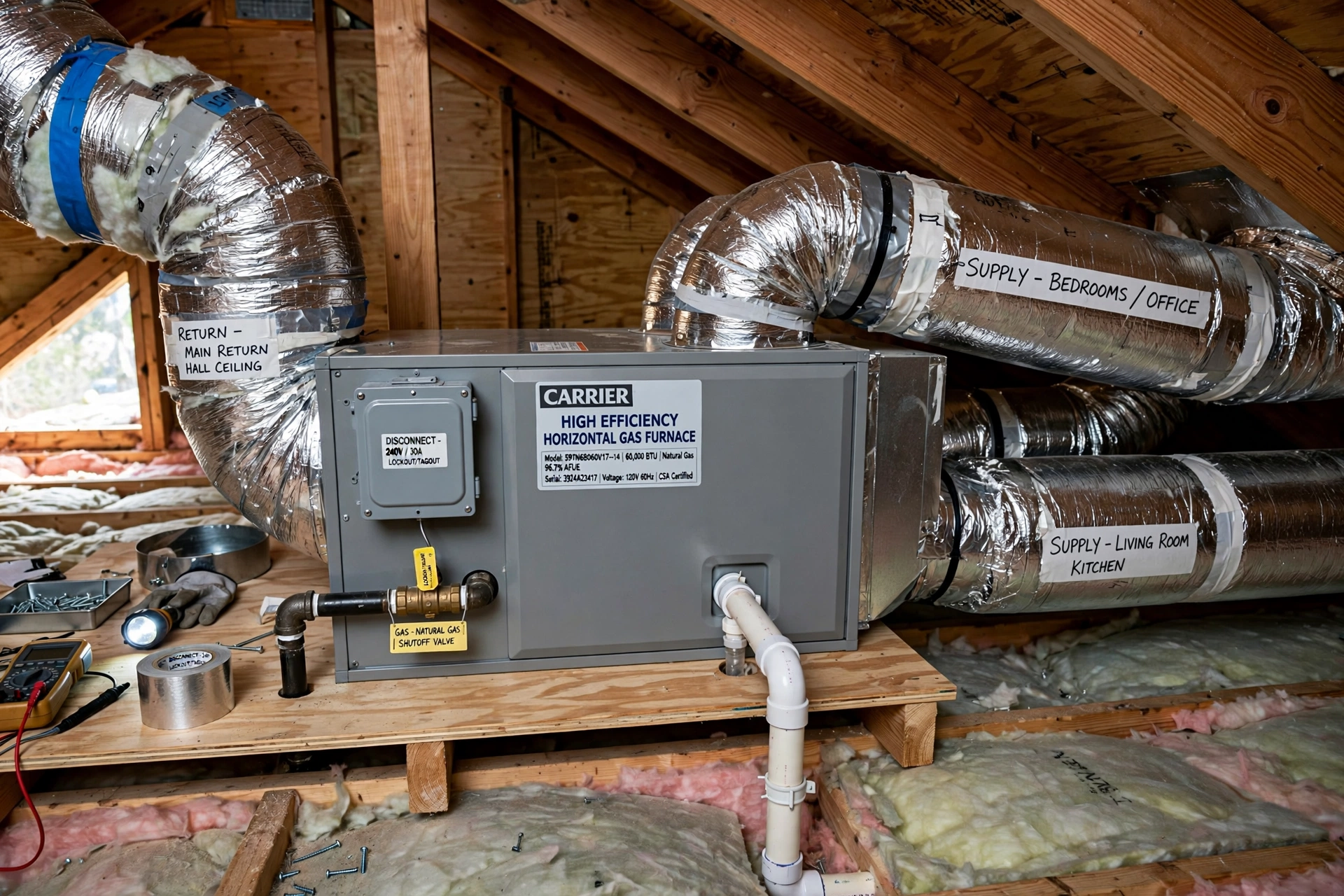
Most emergency furnace repairs are completed in a single visit, often within an hour or two of the technician arriving. Igniters, flame sensors, capacitors, thermocouples, and thermostats are standard truck stock, so the most common no-heat causes get fixed on the spot with a full test cycle before the technician leaves.
Some repairs take longer. A failed blower motor or control board may require a parts run to a local supplier. A cracked heat exchanger stops the repair entirely for safety reasons and moves the conversation to replacement. Access problems, like a furnace buried behind stored items or venting that needs rework, add time too.
You will know the expected timeline before any work begins. If a part must be ordered, the technician makes the system safe, explains exactly what is happening, and schedules the follow-up at the earliest available window so you are not left guessing.
After any emergency repair, the technician runs the furnace through several full heating cycles to confirm the fix holds under real conditions. The thermostat is checked for accurate calibration, airflow is verified at the registers, and the area around the furnace is left clean. You should feel steady, even heat within the hour, and if anything seems off afterward, call back and we will make it right.
Straight answers before you call.
Describe what your furnace is doing and we will point you to the right next step.
Call (571) 561-3454Call (571) 561-3454 and describe the symptoms. Emergency calls are prioritized by severity, and a no-heat call on a freezing night jumps to the front of the route.
Check the thermostat is set to heat and the temperature is above the room reading. Make sure the furnace switch is on and the breaker has not tripped. Do not open the furnace cabinet.
A space heater can bridge the gap in one room. Keep it three feet from anything flammable, never leave it unattended, and never use an oven or grill for heat.
Common failure parts like igniters, flame sensors, capacitors, and thermostats are standard truck stock. Less common parts are sourced fast from local suppliers.
If a repair is not possible or not safe, the technician will explain exactly why, make the system safe, and schedule the follow-up repair or replacement at the earliest window.
Diagnosis and repair for gas-fired furnaces and their controls.
Repair for electric furnaces, air handlers and heat strips.
Seasonal tune-ups that keep the furnace safe and reliable.
New furnace installation sized and set up for Loudoun County homes.
Call now and describe what is happening. We will take it from there.
Call (571) 561-3454